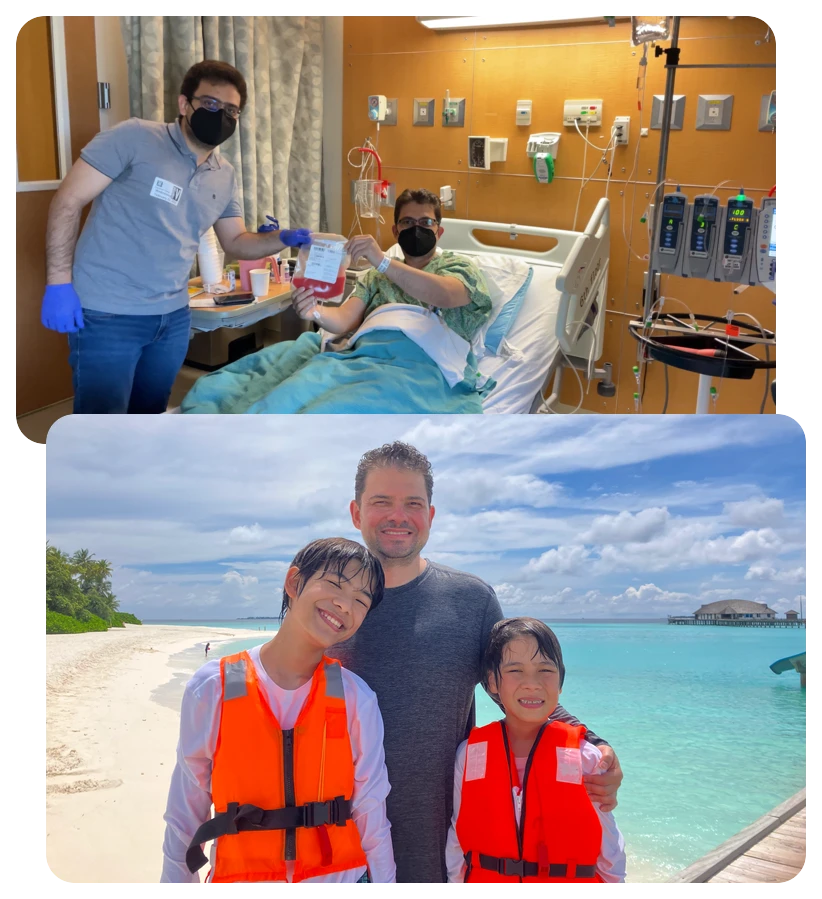
“I am alive today because I received a blood stem cell transplant to treat relapsed lymphoma. But when my doctors evaluated potential donors, none was a perfect match, and there was no way to predict which donor would be safest.”
That uncertainty stayed with me. I realized we need better tools to guide one of the most important decisions in transplantation. That is why I founded Immunomatics, to bring precision medicine to transplantation.
Too many failed transplants.
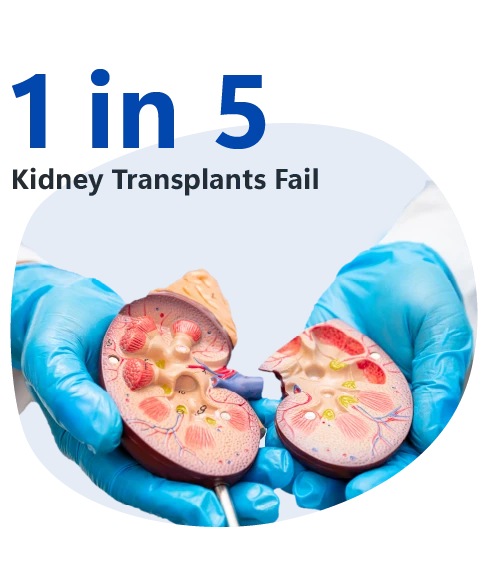
Behind every failed kidney transplant is a patient forced back to dialysis, a family restarting the waitlist process, and billions in avoidable healthcare costs each year.
In blood stem cell transplantation, graft-versus-host disease (GVHD) accounts for 15-35% of deaths, and blood cancer relapse remains high at 25-50%, depending on disease risk.
Through optimal donor selection, Immunomatics aims to reduce the rates of rejection, GVHD, and cancer relapse.
Better matches, better outcomes.
Current practice treats most donor-recipient mismatches as the same risk, missing the key immune details that decide whether an organ is accepted or rejected.
Immunomatics leverages advanced machine learning and HLA compatibility modeling to assess the risk of specific donor-recipient mismatches, helping clinicians make more precise decisions.
Smarter donor selection
Evaluates HLA compatibility beyond simply counting mismatches.
Personalized care
Supports tailored immunosuppression for safer recovery.
Improved access
Expands viable donor options for underrepresented patients.
Evidence-based insight
Built on real transplant outcomes, with planned clinical validation.
Fewer mismatches aren’t always safer.
Traditionally, blood stem cell transplants prioritized fully HLA-matched donors. However, advances like post-transplant cyclophosphamide (PTCy) for GVHD prevention have shifted focus toward balancing HLA compatibility with factors such as age, gender, and transplant protocol, making donor selection complex without specialized decision support software.
- · Reduced-intensity conditioning
- · PTCy GVHD prophylaxis
- · 0 mismatch
- · Older donor
- · Female to male
- · 1 high-risk mismatch
- · Young donor
- · Female to male
- · 2 low-risk mismatches
- · Young donor
- · Male to male
Ranked the way donors were traditionally chosen, by mismatch count, Donor A looks like the safest match.
Illustrative; risk modeling in development, subject to clinical validation.
A rejection-risk score clinicians can act on.
Risk analysis uses existing transplant workflow data. No additional testing required.
Risk scored from data you already collect.
A clear score, at a glance.
Designed to guide donor selection, personalize immunosuppression, and improve rejection monitoring.
Modern computational methods
Models learn patterns linked to rejection risk using advanced machine-learning approaches.
Immunobiology-informed design
Architectures reflect how T and B cells recognize antigens, capturing compatibility more precisely.
Multi-modal evidence
Combines registry outcomes, bioassays, and protein sequences and structures to strengthen the model.
The need is global. The market is growing.
About 220,000 solid-organ and blood stem cell transplants worldwide, at an assumed ~$1,000 in software value per procedure.
Adding allogeneic cell therapies and biopharma partnerships expands the total addressable market well beyond the initial wedge.
Estimates reflect internal planning assumptions and remain subject to product performance, clinical validation, pricing, and commercial execution.
Multiple paths to scale, without re-engineering the platform
Widen adoption across additional transplant departments within existing hospital networks, raising contract value per customer.
Scale sales and regulatory efforts into the high-volume European and Asia-Pacific markets.
Partner with multinational transplant-diagnostic companies to embed our AI models in their existing software.
Commercial agreements with cell-therapy companies that need advanced immune-compatibility modeling.
Progress at a glance
Foundation
- ✓NIH-funded development
- ✓SRTR data access
- ✓Collaboration with UC San Diego's Immunogenetics & Transplantation Lab
Execution
- ✓Proof of concept
- ✓Pilot programs at transplant centers
- ✓NIH Phase II application ($2M)
Vision
- ✓Regulatory clearance
- ✓Expansion across the U.S. and abroad
People who understand both the science and the stakes.
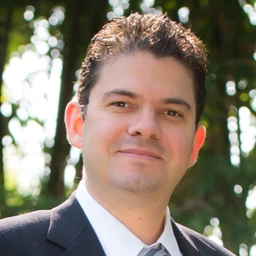
Lidio Meireles, PhD, MS
Stem cell transplant survivor and scientist trained in computational biology and AI. Experience includes contributions to FDA-approved therapeutics at Vertex Pharmaceuticals. Leads product strategy, model design, and clinical validation.
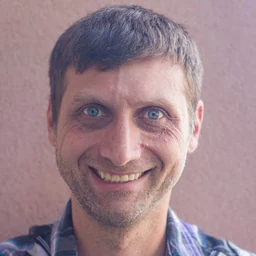
Tonislav Ivanov, MS
Specializes in deep learning, with 10+ years of experience spanning the aerospace, healthcare, and semiconductor sectors.
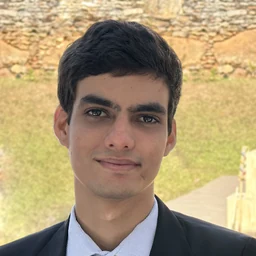
David de Oliveira Lima, MS Candidate
Specializes in deep learning for biomedical applications, including computational histopathology software to assess renal glomerular lesions.
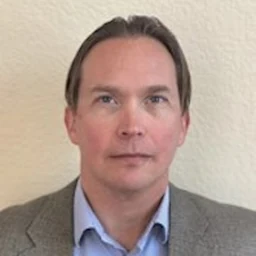
Gerald P. Morris, MD, PhD
Director of the Immunogenetics and Transplantation Laboratory at UC San Diego, with over a decade of expertise in histocompatibility. Advises on transplant immunology and clinical relevance.
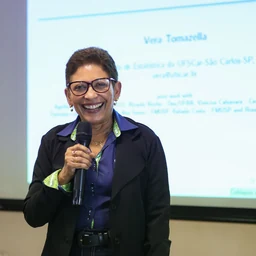
Vera Tomazella, PhD
Professor of Biostatistics at the Federal University of Sao Carlos (UFSCar). Specializes in survival analysis, cure fraction models, and frailty modeling. Advises on survival analysis methods.
Danilo Alvares, PhD
Postdoctoral Research Fellow at the University of Sao Paulo; Visiting Researcher at the MRC Biostatistics Unit, University of Cambridge. Specializes in survival analysis and Bayesian methods. Advises and conducts survival analyses.
Reference to UC San Diego, the Federal University of Sao Carlos, the University of Sao Paulo, and the MRC Biostatistics Unit at the University of Cambridge is for identification purposes only and does not imply institutional endorsement or support.
Join us in improving transplant outcomes.
Fighting transplant rejection should be a shared mission. Your investment directly accelerates development, clinical validation, and the partnerships needed to bring this technology to real-world clinical use.